Red-dot sights
A red-dot sight gives you a clear reticle without projecting an aiming laser toward the target. It supports fast, target-focused aiming—but your eye still needs a view through the sight.
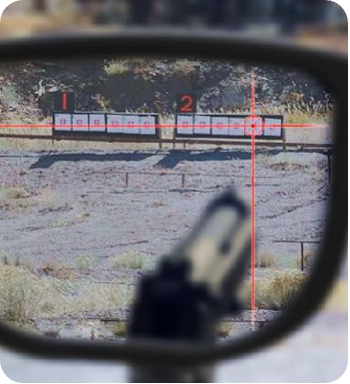
RedEye displays an aiming reticle in your natural field of view through augmented reality (AR) glasses. The reticle follows where your firearm is pointing, so you can react and aim without lining your eye up behind its sights—and without projecting a visible or infrared aiming laser.
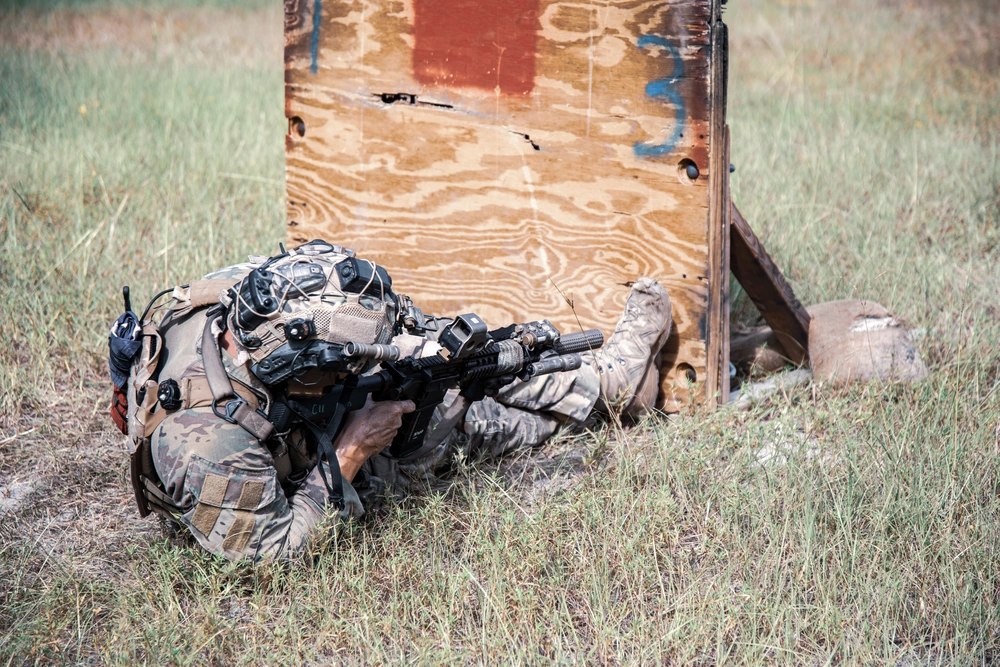
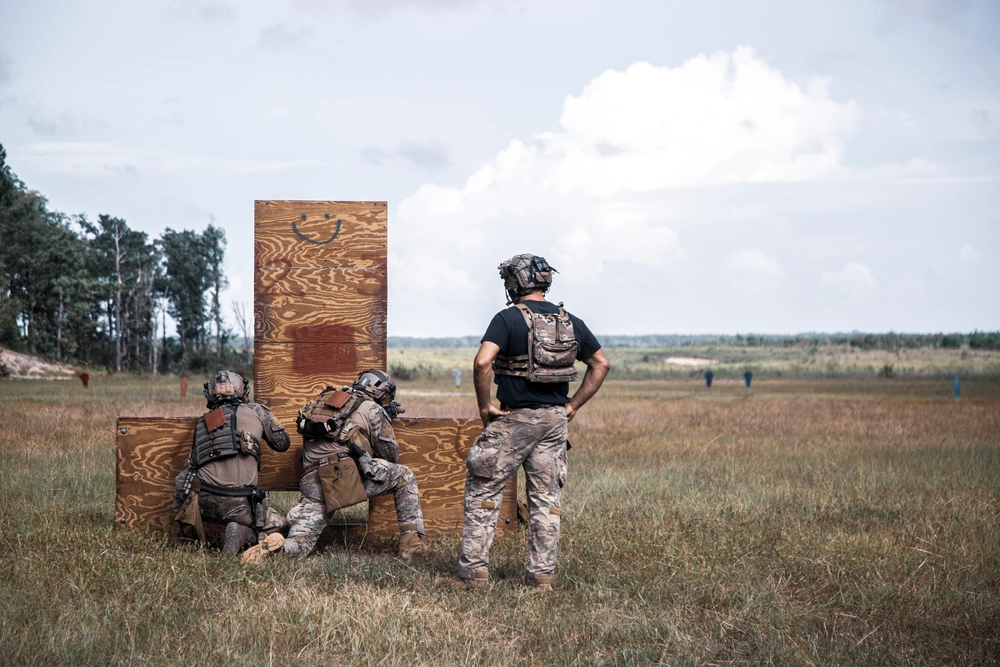
You can have a clear view of a target without being able to see through the firearm's sight. Cover and confined spaces can make eye-to-sight alignment difficult, even when the firearm can be pointed toward the target.
A red-dot sight gives you a clear reticle without projecting an aiming laser toward the target. It supports fast, target-focused aiming—but your eye still needs a view through the sight.

A laser lets you aim without looking through a sight. But you need to see its spot on the target or background, and visible or infrared laser light is projected into the scene. Spot visibility depends on lighting, distance, and the surface it reaches.
Scenario imagery—not RedEye demonstrations.
The reticle is not simply a dot fixed at the center of the glasses. Its position changes with the firearm's direction relative to your view. You can see where the firearm is pointing without first bringing its sight into alignment with your eye.
An orientation sensor on the firearm and another in the glasses measure how each is oriented.
RedEye compares those measurements to determine the firearm's direction relative to the glasses.
The reticle's position updates as the firearm or your head moves, showing the firearm's direction in your view.
Cover can leave you a clear view of the target but little room to align your eye with the firearm's sight. RedEye shows where the firearm is pointing in your glasses, so aiming does not depend on bringing that sight into view.
You do not have to move your head behind the firearm's sight just to see the reticle. That gives you more choice in head position as you return to aim.
An aiming laser gives you freedom from the sight window. RedEye provides that flexibility with a reticle in your glasses instead of a spot projected onto the target.

Confined interiors can restrict the position needed to look through a weapon-mounted sight.
RedEye lets you aim while keeping your head positioned to see the target and surroundings, rather than bringing the sight to your eye.
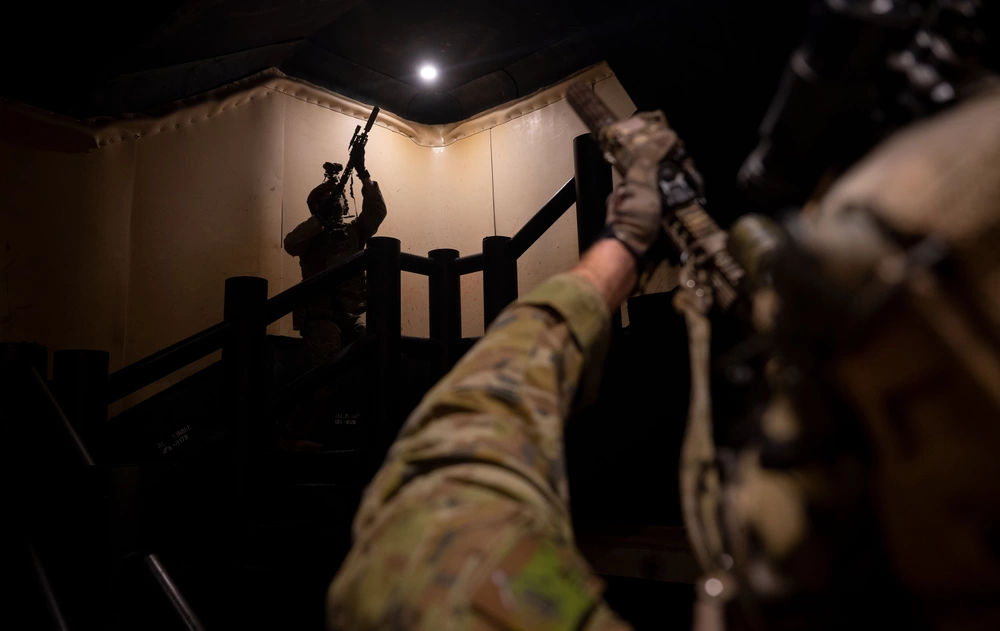
When aiming sharply upward or downward, seeing the target and getting behind the sight can require different head positions.
RedEye's reticle follows the firearm's direction in your glasses, rather than requiring your eye to follow the sight's angle.
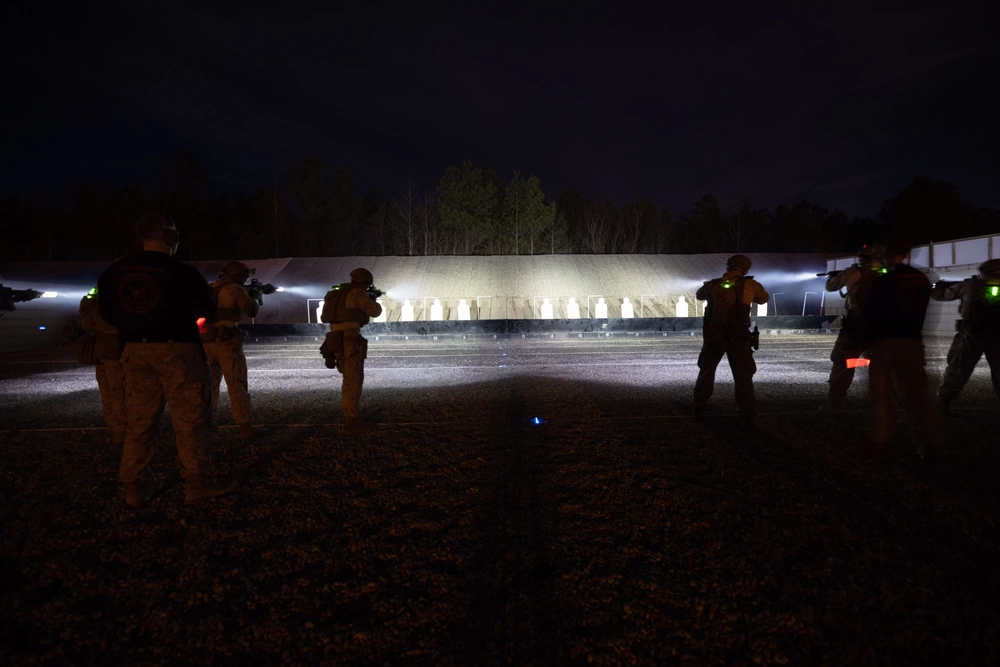
An aiming laser can make heads-up aiming easier in low light, but it also projects visible or infrared light into the scene.
RedEye displays the reticle in the glasses instead, preserving aiming flexibility without projecting an aiming laser.

Keeping a small aerial target in view and keeping your eye behind the firearm's sight are separate demands.
RedEye is designed to show the firearm's direction in your view of the sky, without requiring a view through the weapon-mounted sight.
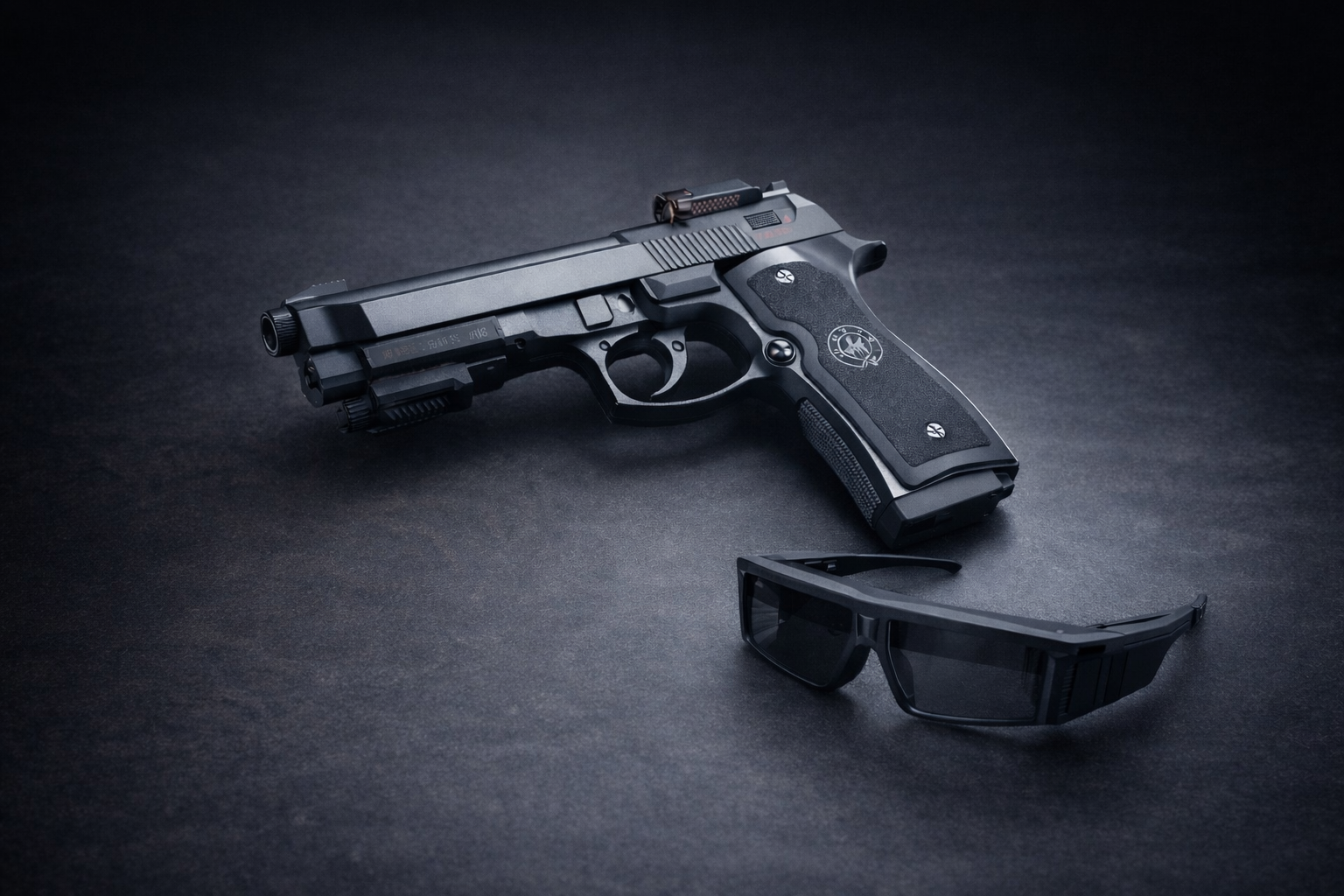
RedEye combines AR glasses with a rail-mounted firearm sensor. Together, they display the firearm's direction in your field of view, without requiring you to look through the firearm's sight. Intended users include civilian firearm owners, law enforcement, and military ground forces.
Future Optek has two issued U.S. patents addressing AR aiming and networked sensing. The records below provide their descriptions and issued claims.
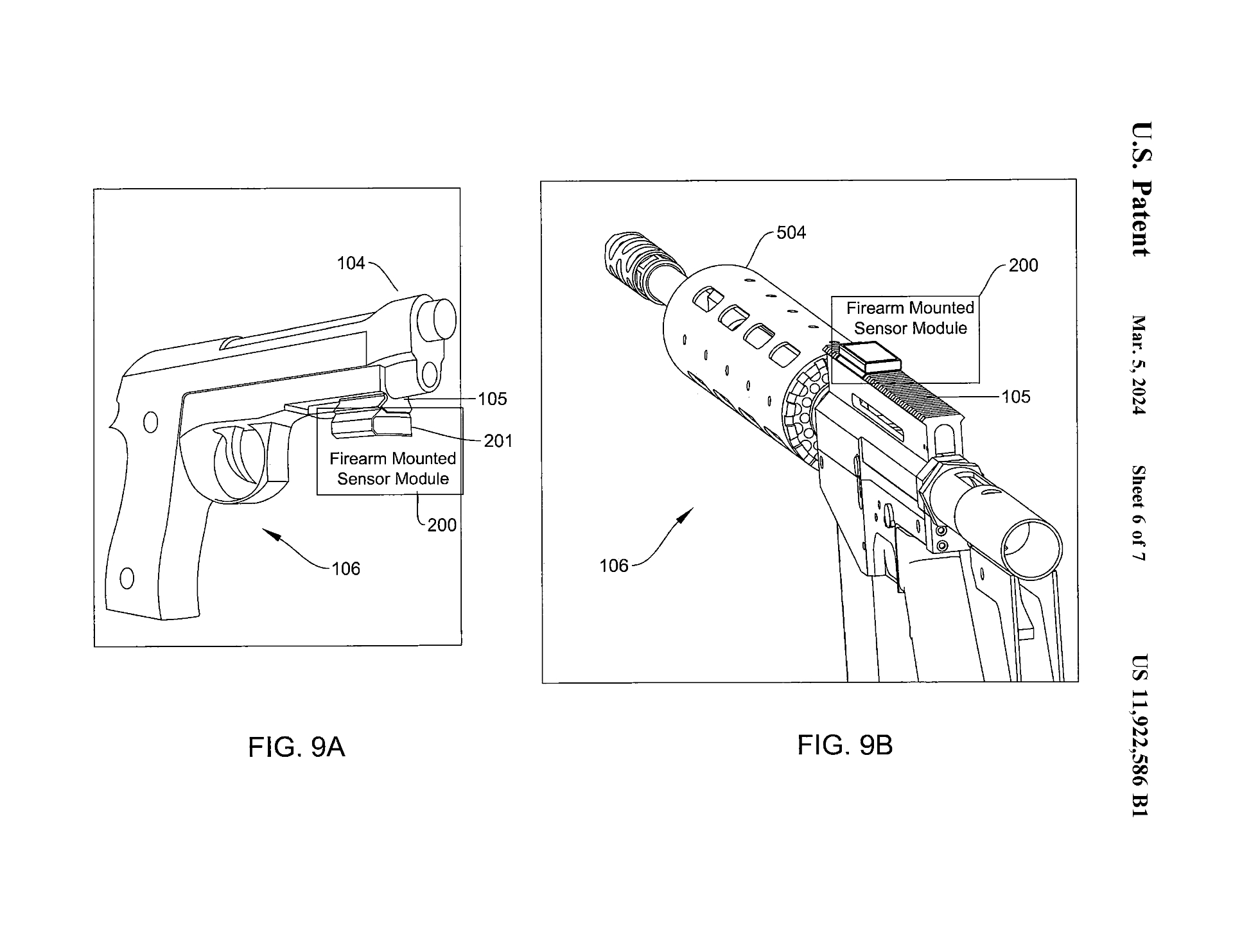
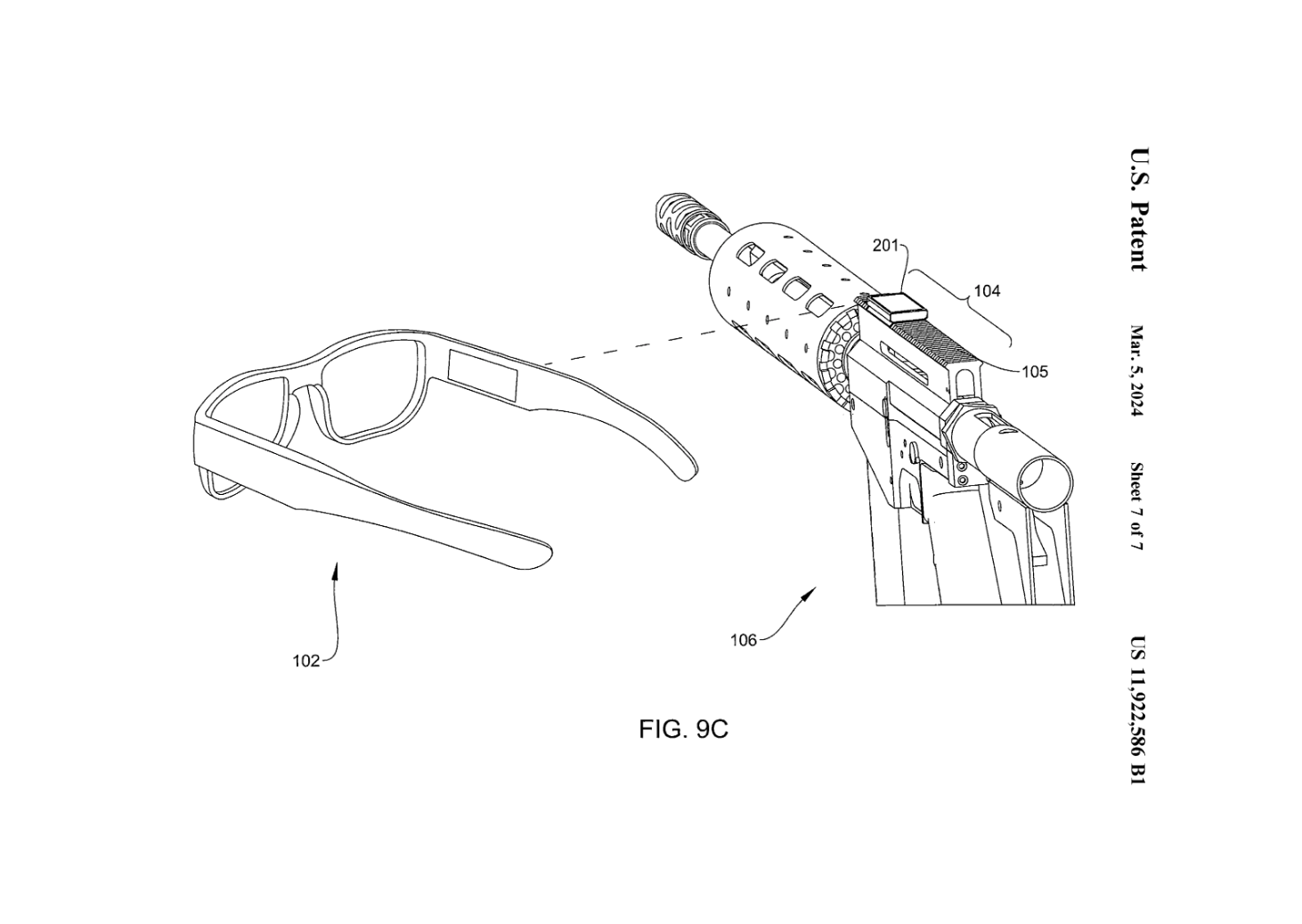
This patent describes using sensor information from the firearm and glasses to position an aiming reticle in the wearer's view. The reticle is displayed separately from the firearm, allowing the wearer to see it without looking through a weapon-mounted sight.
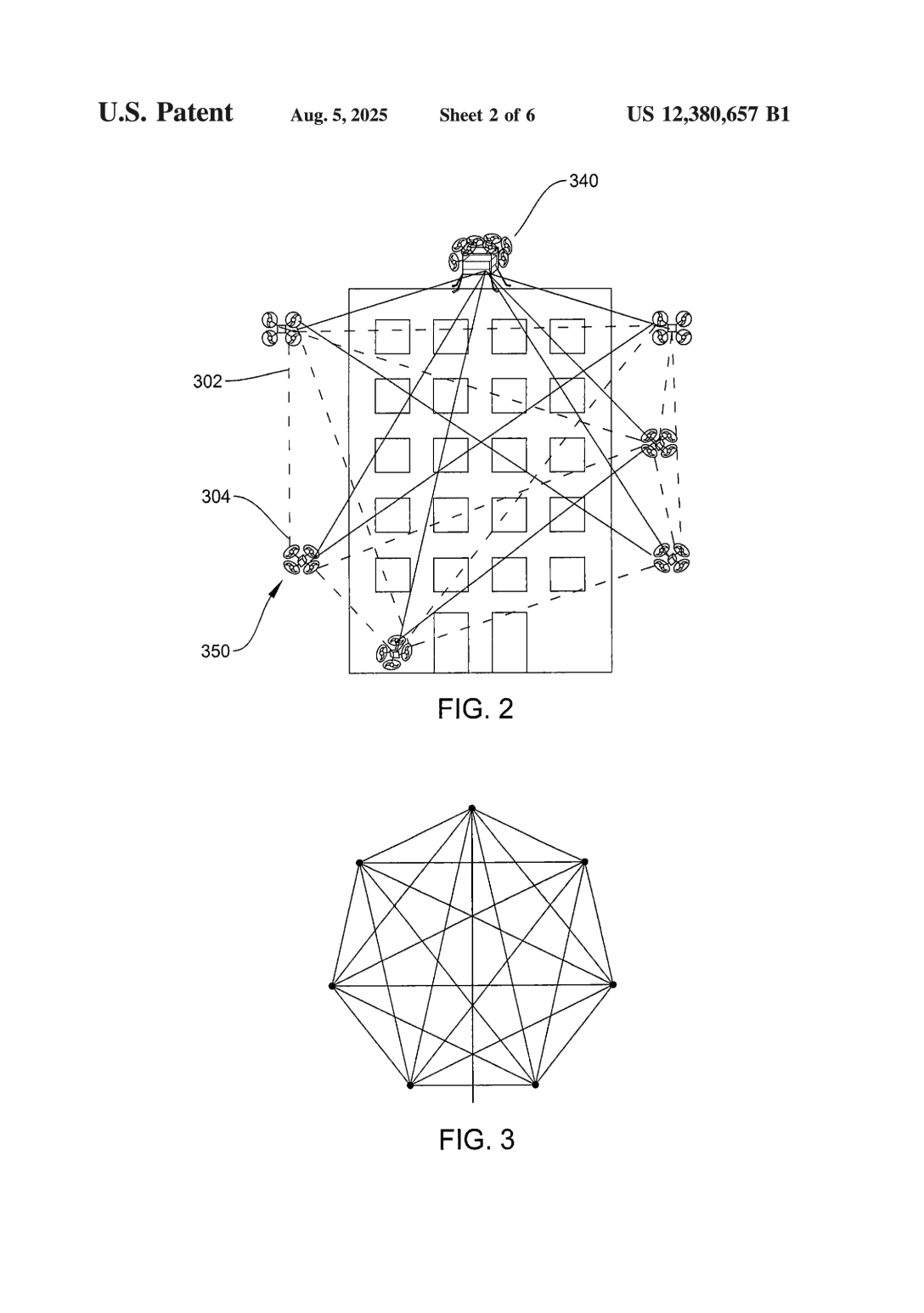
This patent describes bringing information from connected glasses, drones, and other sensor-equipped devices into a shared mixed-reality view. It also describes modular headset components and coordinated drone scanning and mapping, extending the concept beyond an individual aiming display.
The RedEye prototype has been demonstrated in an operational environment. Future Optek has two issued U.S. patents and coverage from defense and technology publications.
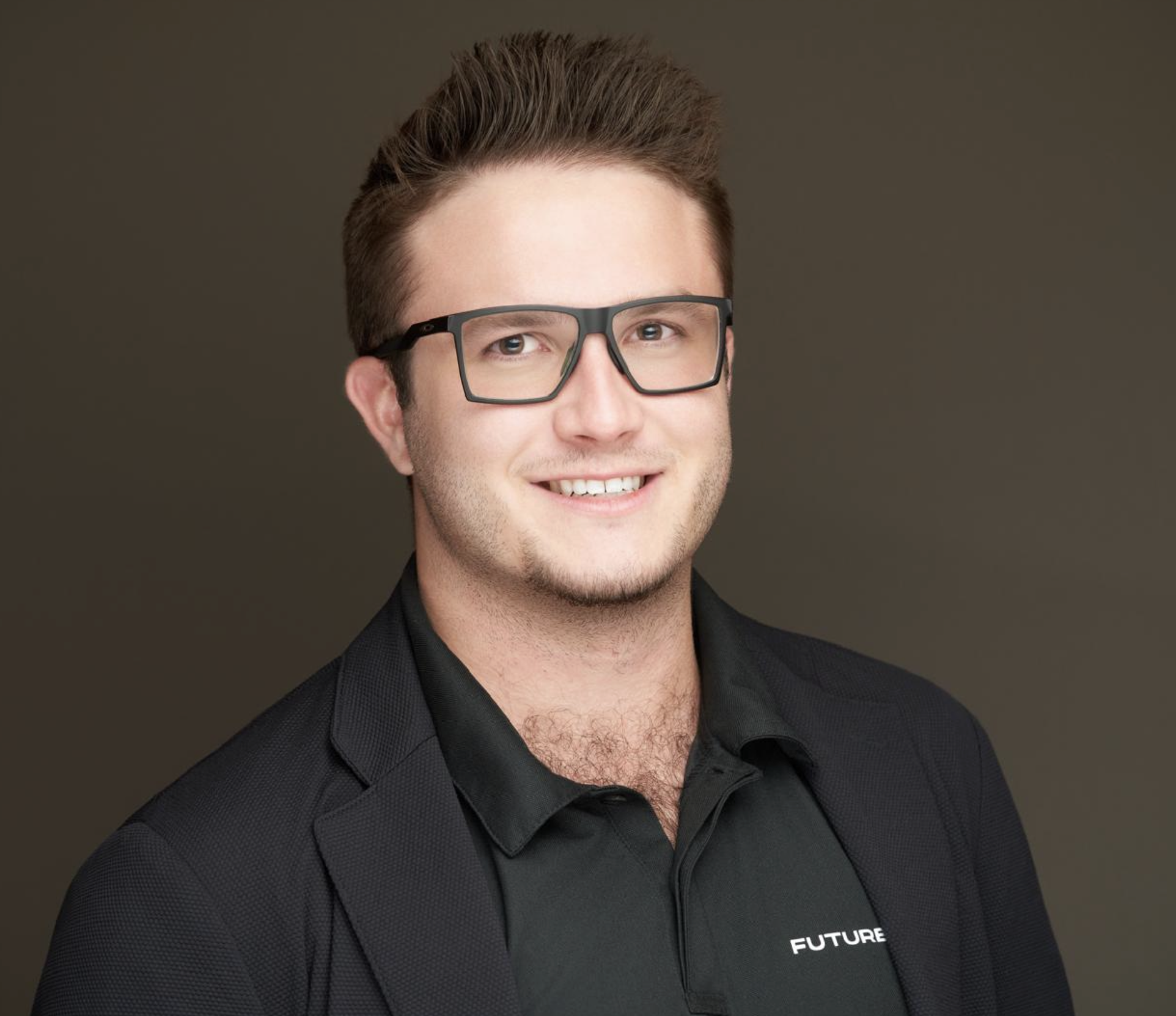
The idea started on a beach in the Florida Keys. Matthew Pohl had been reading about transparent AR displays and wondered whether glasses could show an aiming reticle that followed where a firearm was pointing.
Developing that idea into a fielded system has taken engineers working on inertial sensing, optics, and embedded software, alongside test partners, instructors, and advisors who have tested the prototype in live fire. Their work has led to two issued U.S. patents and a prototype validated in the field.
"We really succeeded in designing this in a way that makes sense for a soldier's situational awareness — prioritising what they should be focusing on."
For product inquiries, partnerships, or technology licensing, contact info@futureoptek.com.